
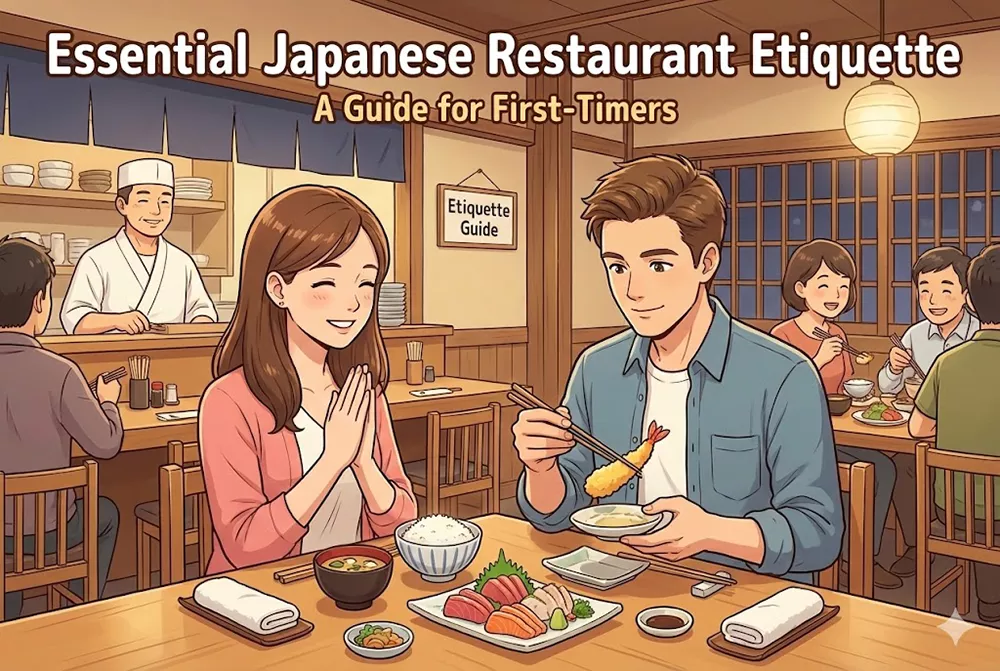
Japanese cuisine is one of the biggest highlights of any trip to Japan. From high-end sushi to humble ramen stalls, the food is consistently incredible. However, Japanese dining culture has its own set of “unwritten rules” that might surprise you.
Here are the essential tips to help you dine like a local and avoid any awkward moments.
The Magic Words: “Itadakimasu” and “Gochisosama”
Before you take your first bite, it is polite to say “Itadakimasu” (I humbly receive). This isn’t a religious prayer, but a way of showing gratitude for the food and the people who prepared it.
When you finish your meal, say “Gochisosama-deshita.” It means “It was a feast,” and it’s the best way to show the staff you enjoyed the meal.
The “Oshibori” (Wet Towel)
As soon as you sit down, you’ll likely be given a rolled-up wet towel called an Oshibori.
- The Rule: Use it to clean your hands only, not your face or the table.
- Once used, fold it neatly and set it aside. It’s a small gesture that shows you respect the restaurant’s hospitality.
Understanding “Otoshi” (The Table Charge)
In many Japanese bars (Izakaya) and some restaurants, you will be served a tiny appetizer you didn’t order. This is called Otoshi.
- Is it free? No. It serves as a “cover charge” or table fee, usually ranging from 300 to 500 yen per person.
- Why does it exist? It’s a traditional way for restaurants to ensure a minimum profit while you enjoy your first drink. Think of it as a small “welcome snack” rather than an error on your bill.
No Tipping Required (Really!)
One of the most confusing things for Western travelers is the lack of a tipping culture.
- The Rule: Do not leave a tip. In Japan, high-quality service is expected and included in the price.
- What happens if you tip? If you leave extra cash on the table, the waiter will likely chase you down the street to return the “forgotten” money! A simple “Arigato” (Thank you) is the best reward.
Paying the Bill: The Cashier is King
In many Western countries, you ask for the check at your table. In Japan, the process is usually different.
- Look for a small slip of paper or a clipboard left at your table when the food was served.
- Take that slip to the cashier counter near the entrance to pay.
- Payment tip: Many smaller shops still prefer cash, though your Suica (Transit card) or credit cards are increasingly accepted in major cities.
Chopstick Taboos to Avoid
Chopsticks are for eating, not for playing. To stay respectful, avoid these two major taboos:
- The “Tombstone”: Never stick your chopsticks vertically into a bowl of rice. This resembles a funeral ritual.
- The “Pass”: Never pass food directly from your chopsticks to someone else’s chopsticks. Again, this is associated with funeral traditions.
Summary
Don’t let these rules intimidate you! Japanese staff are generally very patient and welcoming to tourists. If you remember to say “Arigato,” avoid tipping, and handle your chopsticks with care, you will have a fantastic dining experience.

Comments