
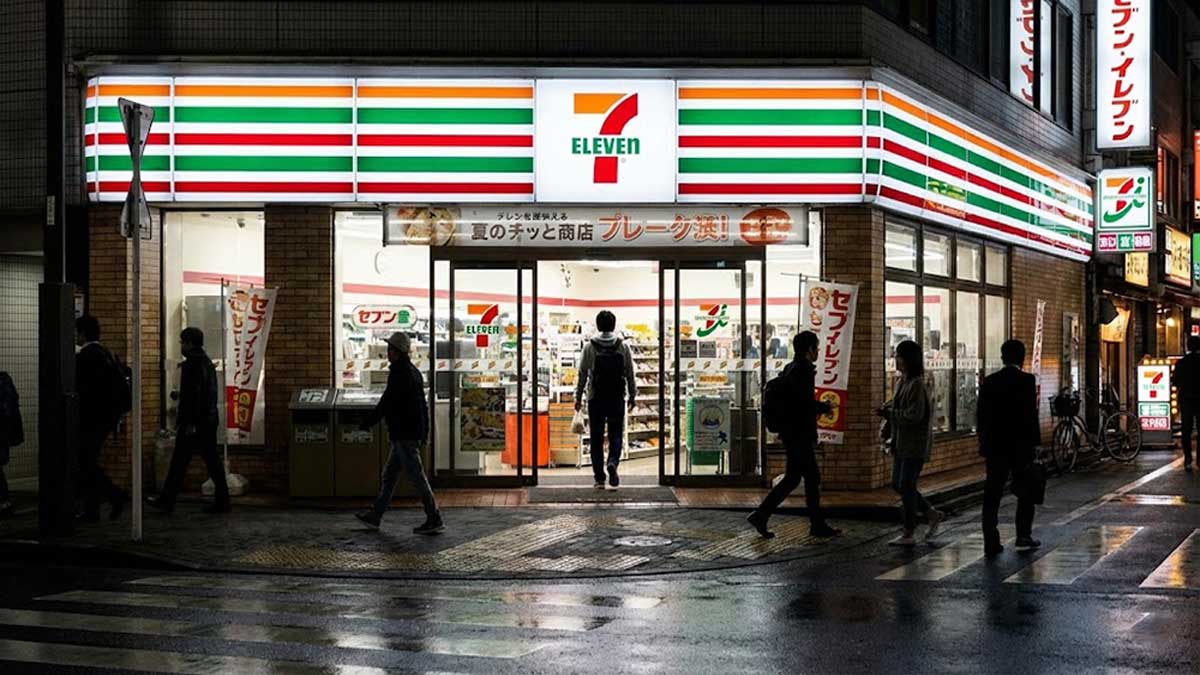
If you visit Japan, there is one place you will likely visit more than any shrine or temple: the Konbini (Convenience Store).
In many countries, convenience store food is considered a last resort. In Japan, it is a culinary adventure. Open 24/7, spotlessly clean, safe, and filled with high-quality food, the Konbini is an essential part of daily life.
Here is everything you need to know to navigate the aisles of 7-Eleven, Lawson, and FamilyMart like a local.
1. The “Big Three” Chains
While they sell similar items, each major chain has its own specialty:
- 7-Eleven: The market leader. Famous for its high-quality Bento boxes, Onigiri, and the Egg Salad Sandwich.
- Lawson: Known for its top-tier desserts (especially the Premium Roll Cake) and “Karaage-kun” chicken nuggets.
- FamilyMart: Famous for “Famichiki,” a juicy, boneless fried chicken breast loved by everyone.
2. The “Must-Try” Konbini Foods
Forget stale hot dogs. Here are the items that hold a legendary status among travelers and locals alike.
Onigiri (Rice Balls)
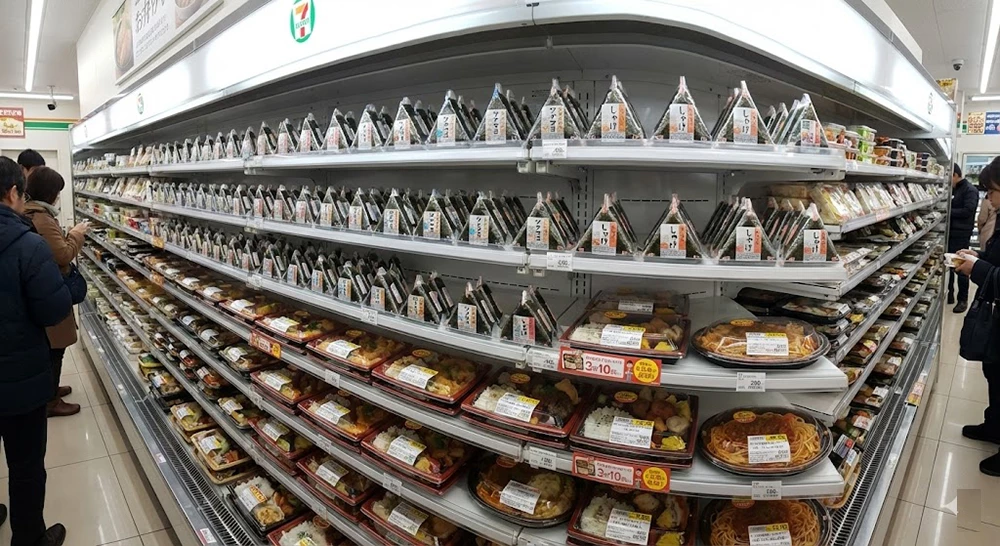
The king of Konbini food. They are cheap (around 150 yen) and filling.
- Top Pick: Tuna Mayo (ツナマヨ) is the most popular flavor.
- Classic: Salmon (シャケ – Shake) and Pickled Plum (梅 – Ume).
Sandwiches
Thanks to famous chefs like Anthony Bourdain raving about them, Japanese convenience store sandwiches are world-famous. The bread (shokupan) is impossibly fluffy.
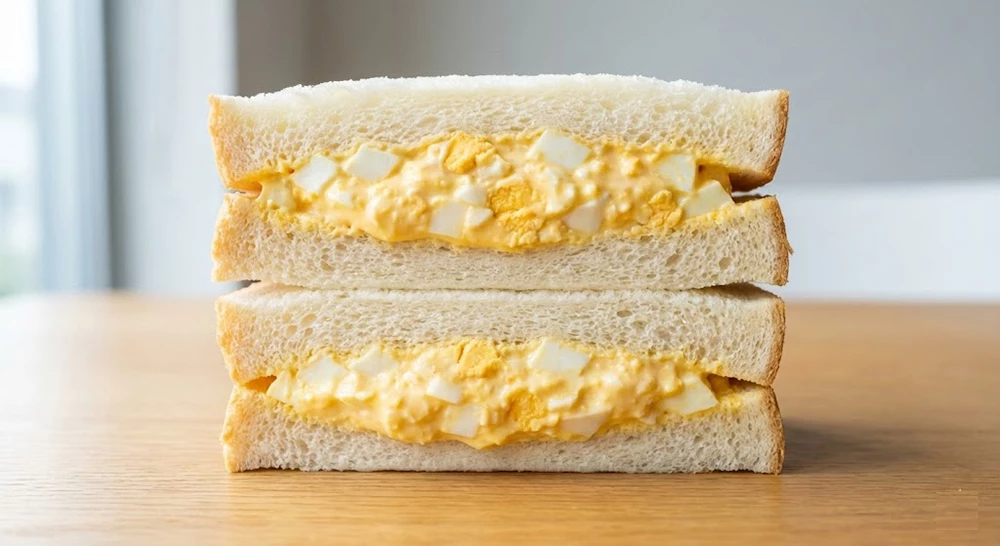
- The Egg Salad Sandwich (Tamago Sando): Creamy, rich, and a must-try at 7-Eleven.
- Others to Try: Look for the Pork Cutlet (Katsu) sandwich for lunch, or the Fruit Cream sandwich (strawberries and cream) for dessert.
Hot Snacks (Fried Chicken)
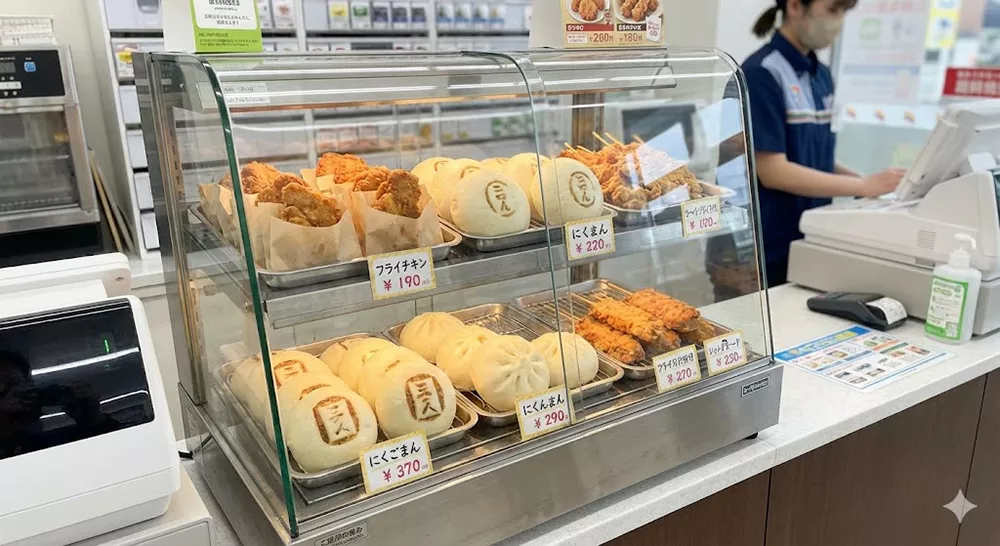
Next to the register, you will see a glass case of hot food. This is not to be ignored.
- FamilyMart: Order the “Famichiki.”
- Lawson: Order “Karaage-kun” (nugget-sized bites available in various flavors like Red or Cheese).
- 7-Eleven: Order the “Nana-Chiki.”
Coffee & Desserts
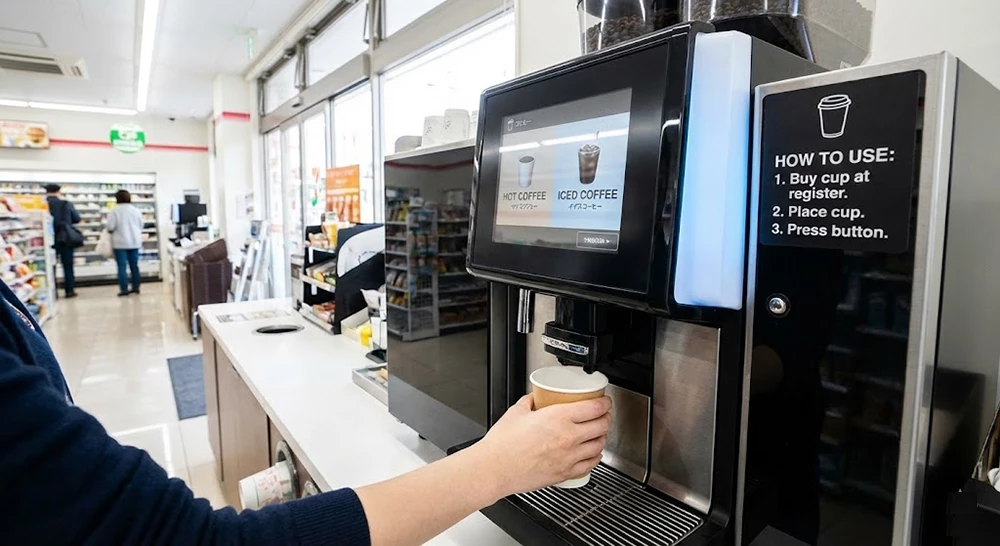
- Coffee: Japanese convenience store coffee is surprisingly high quality and cheap. You usually buy a cup at the register (say “Hot Coffee, Small”), and then fill it yourself at the machine near the entrance.
- Desserts: Don’t miss the chilled section. Lawson’s Premium Roll Cake is particularly famous.
3. How to Open an Onigiri (The 1-2-3 Method)
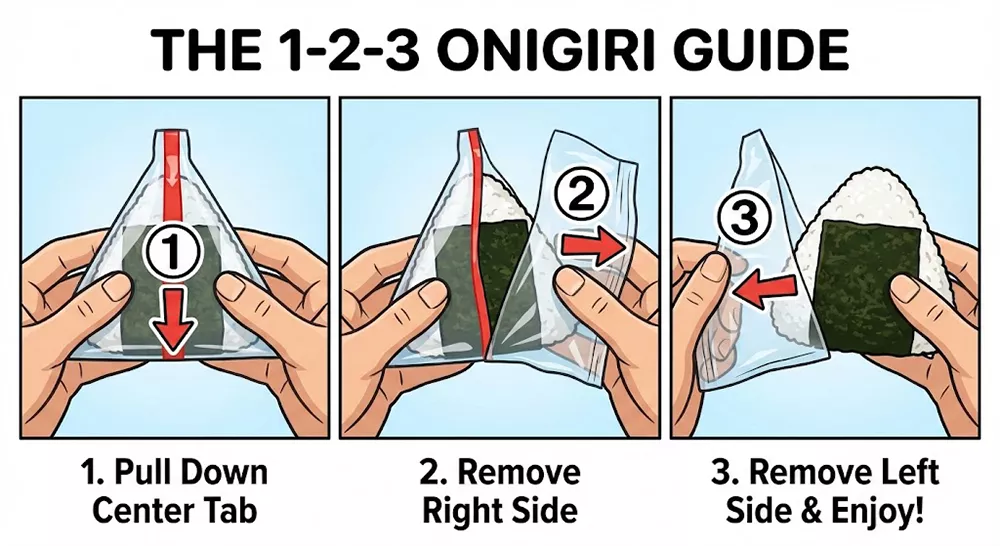
You bought a triangular onigiri, but it’s wrapped in a sophisticated plastic film designed to keep the seaweed crispy until the very last second. Many first-timers struggle with this!
The Trick: Follow the numbers printed on the corners of the package.
- Pull tab #1 straight down the middle to split the film.
- Pull corner #2 gently to the right to remove half the film.
- Pull corner #3 gently to the left to remove the rest. Success! You now have a crispy rice ball.
4. Ordering at the Register: A Script
Buying items off the shelf is easy, but the interaction at the counter can be intimidating because the staff often speak quickly. Here is what is happening:
Ordering Hot Snacks
You cannot grab the fried chicken yourself. You must ask the staff.
- Point to the item and say: “Kore kudasai” (This one, please).
- Counting: “Hitotsu” (One) or “Futatsu” (Two).
The Three Questions Staff Will Ask You
The clerk will likely ask you three things in rapid Japanese. Don’t panic! Here is the cheat sheet:
- “Fukuro wa irimasu ka?” (Do you need a plastic bag?)
- Context: Plastic bags cost a small fee (3–5 yen).
- Answer: “Hai” (Yes) or “Iie” (No / I have my own).
- “Atatamemasu ka?” (Do you want this microwaved?)
- Context: Asked if you buy a Bento box.
- Answer: “Hai” (Yes) or “Iie” (No).
- “Point card?”
- Context: They are asking for a loyalty card.
- Answer: Just say “No.”
5. Essential Services for Travelers
The Konbini is more than just a food stop; it is a life-saver for tourists.
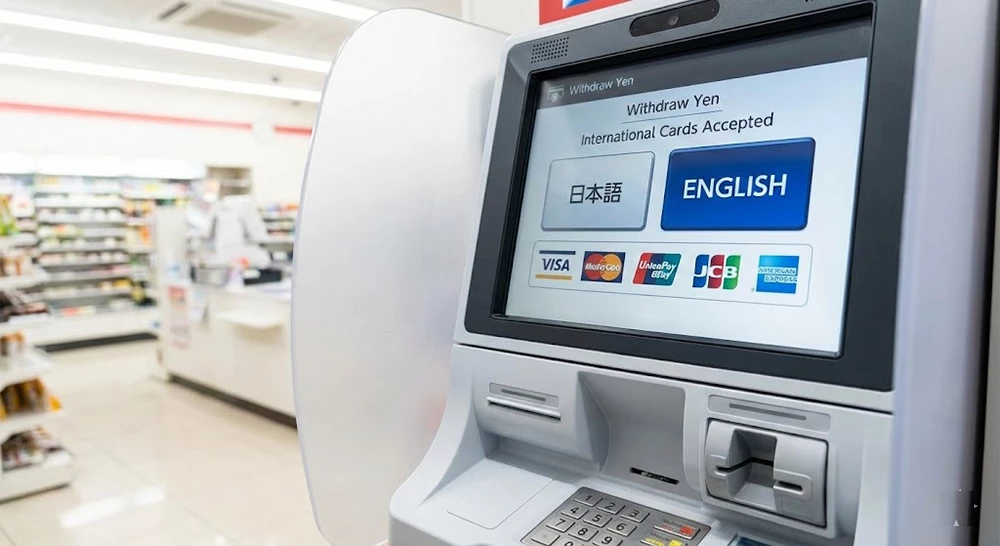
- ATMs: 7-Eleven ATMs are widely considered the most reliable for accepting international credit/debit cards to withdraw Japanese Yen.
- Trash Cans: Public trash cans are rare in Japan. You can usually find bins for burnable items, plastics, and bottles inside or just outside convenience stores. Note: It is polite to buy something if you use their bins.
- Restrooms: Many Konbini have clean restrooms available. It is polite to ask “Toilet OK?” or buy a small item like gum or water before using them.
Summary
Whether you need a quick breakfast, a late-night snack, or just cash from the ATM, the Konbini is always there for you. Don’t be afraid to try new things—buying a mysterious drink or snack is half the fun!
Read Next:
Comments