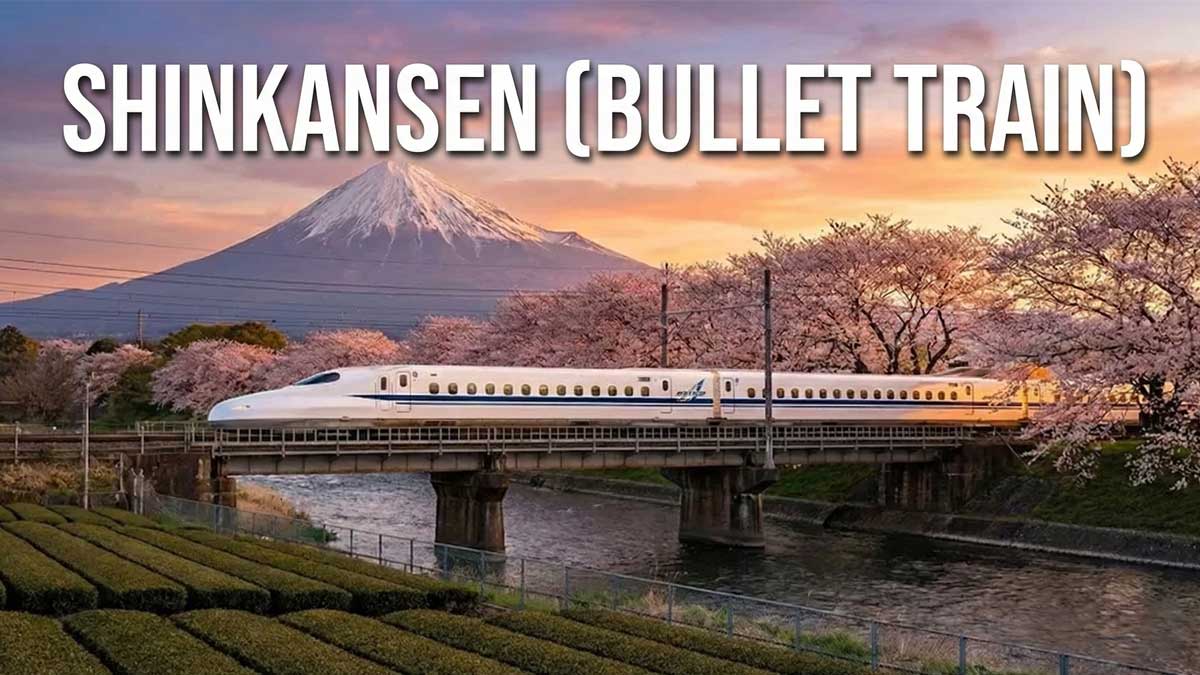
The Shinkansen (Bullet Train) is more than just a train; it is a symbol of Japanese technology and efficiency. Cruising at speeds of up to 320 km/h (200 mph), it is the fastest and most convenient way to travel across Japan.
However, the system can be confusing for first-time visitors. Which train should you take? Do you need a reservation? What about luggage?
Here is your ultimate 2026 guide to mastering the bullet train like a pro.
1. Types of Trains: Speed Matters
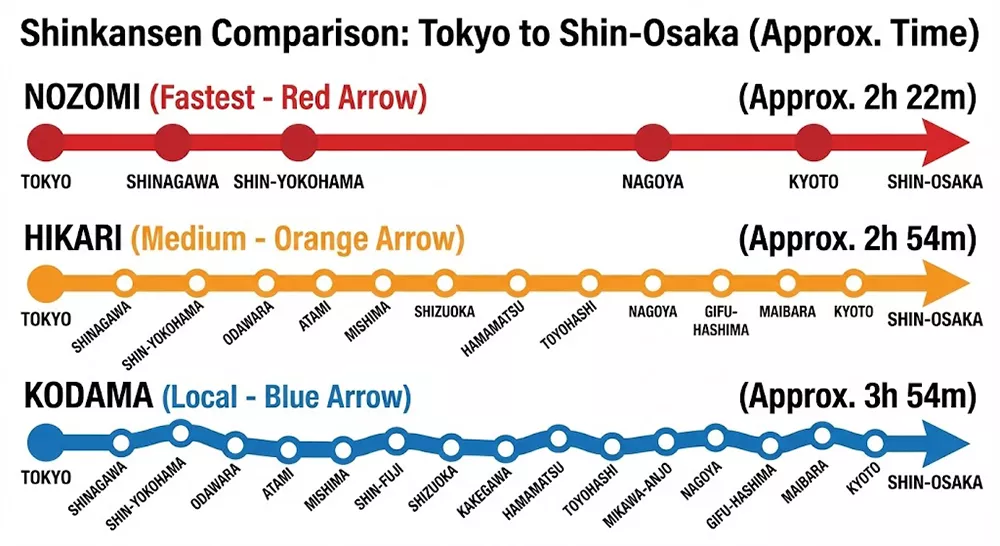
Not all Shinkansen are the same. On the main line (Tokaido/Sanyo Line) connecting Tokyo, Kyoto, Osaka, and Hiroshima, there are three main types. Choosing the wrong one can add hours to your trip!
- Nozomi (The Fastest): Stops only at major stations (Tokyo, Shinagawa, Shin-Yokohama, Nagoya, Kyoto, Shin-Osaka, etc.). It is the best choice for long distances.
- Important Note: If you use the standard Japan Rail Pass, you must pay an extra fee to ride the Nozomi.
- Hikari (The Medium): Stops at more stations than Nozomi. It is slightly slower but fully covered by the Japan Rail Pass with no extra cost.
- Kodama (The Local): Stops at every single station. It takes a long time (about 4 hours from Tokyo to Osaka), so avoid this for long trips unless you want to visit smaller towns.
2. Ordinary Car vs. Green Car (First Class)
When buying a ticket, you will see two classes:
- Ordinary Car (Futsu-sha): Standard seats. They are clean, comfortable, and offer plenty of legroom—much more than an economy flight!
- Green Car (Green-sha): This is Japan’s “Business Class.” The seats are wider, recline further, and the cabin is quieter. If you want a luxurious experience, it is worth the upgrade.
3. Reserved vs. Non-Reserved Seats
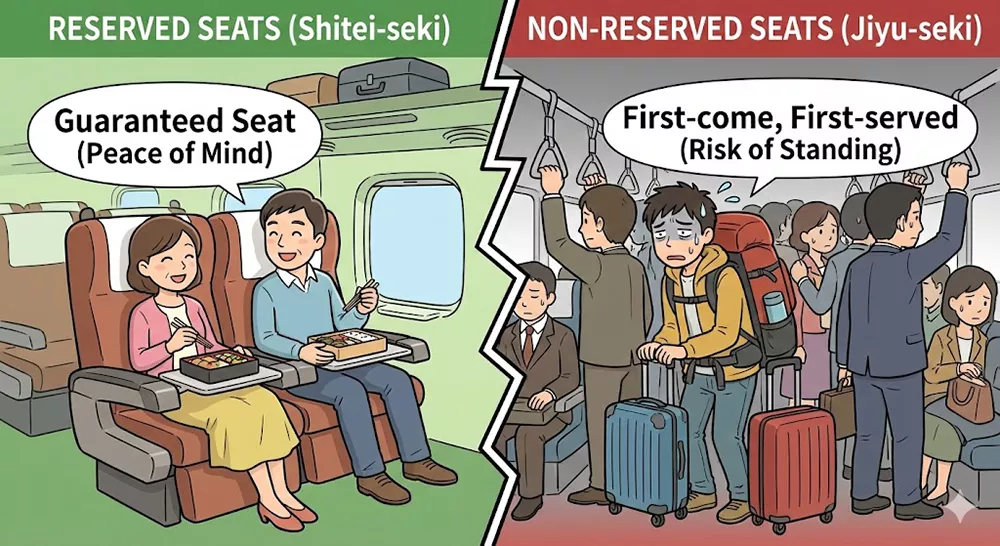
- Reserved Seats (Shitei-seki): You are guaranteed a specific seat. We highly recommend this if you are traveling with family, carrying luggage, or traveling during rush hour (mornings and evenings).
- Non-Reserved Seats (Jiyu-seki): These are cheaper (usually by about 500–1000 yen), but it is first-come, first-served.
- Warning: During peak seasons (Cherry Blossoms, Golden Week, New Year), these cars get incredibly crowded. You might have to stand for the whole 2.5-hour trip to Kyoto!
🗻 Pro Tip: How to See Mt. Fuji
Do you want to see Mt. Fuji from the train window?
- From Tokyo to Kyoto/Osaka: Reserve a seat on the right side (Seat E).
- From Osaka/Kyoto to Tokyo: Reserve a seat on the left side (Seat E). Mt. Fuji usually appears about 40–45 minutes after leaving Tokyo Station. Get your camera ready!
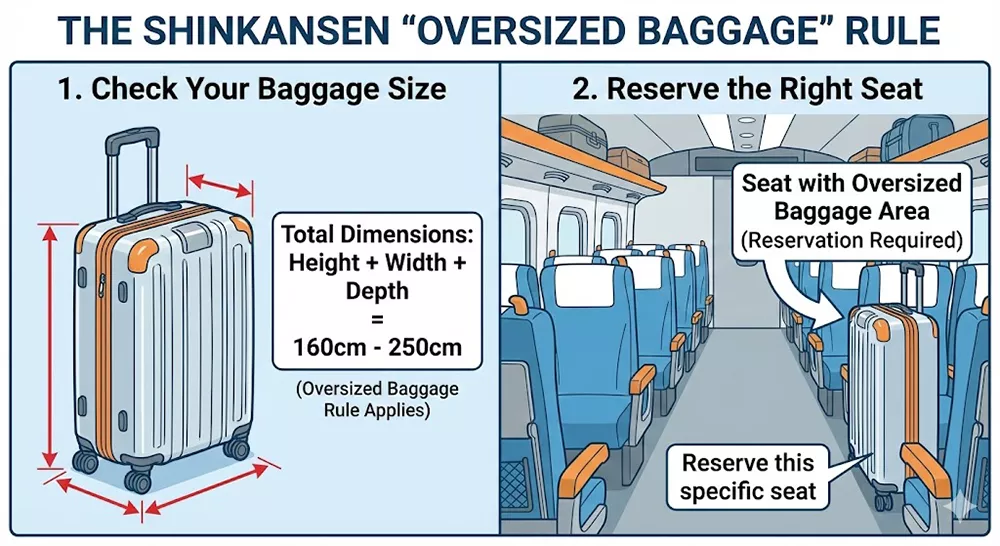
4. The “Oversized Baggage” Rule (Crucial!)
If you have large luggage, you must be careful. Since May 2020, strict rules apply on the Tokaido/Sanyo/Kyushu Shinkansen.
- The Rule: If your baggage total dimensions (height + width + depth) are between 160cm and 250cm, you MUST reserve a specific seat called “Seat with Oversized Baggage Area.”
- This seat is located at the back of the train car, where there is space for large suitcases.
- The Penalty: If you bring large bags without this reservation, you will be charged a 1,000 yen penalty fee and may be asked to move to a different car.
- Alternative: If you don’t want to carry heavy bags, consider using a luggage delivery service (Takkyubin) to send your bags directly to your next hotel.
5. Food on the Train: The “Ekiben” Culture
Unlike local trains where eating is sometimes frowned upon, eating on the Shinkansen is highly encouraged! Before you board, visit the station shops to buy an “Ekiben” (Station Bento). These are high-quality lunch boxes featuring local specialties. Pair it with a cold Japanese beer or green tea for the perfect ride.
- Need snacks? Make sure to stop by a convenience store before you enter the gate.
6. How to Buy Tickets (And Save Money!)
There are three main ways to get tickets:
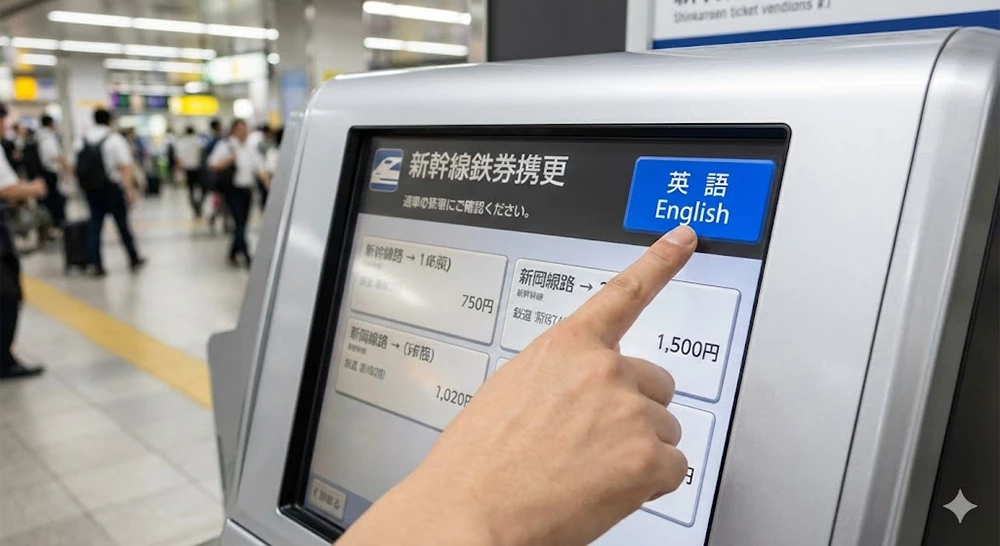
- Ticket Machines: Available at all stations. Look for the button that says “English.” It can be a bit complicated for beginners.
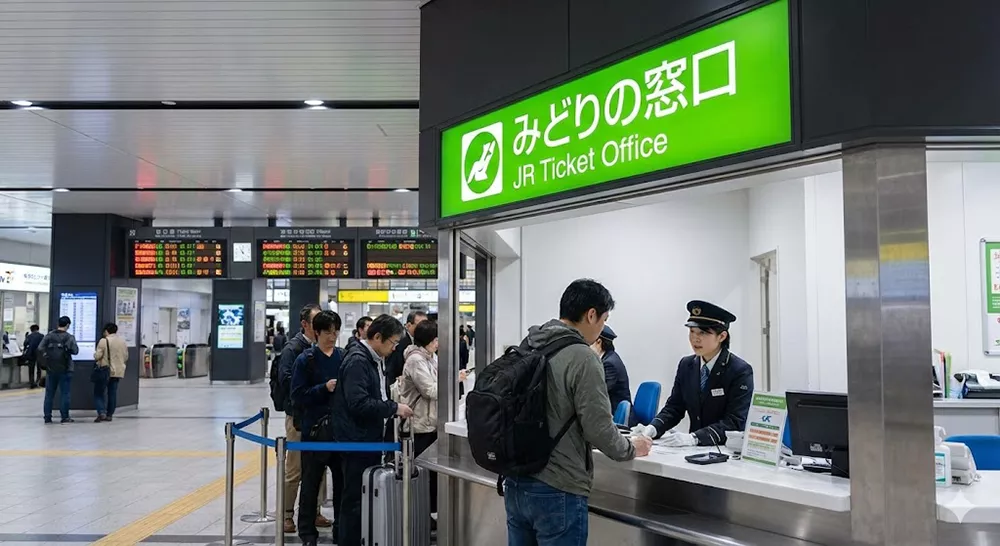
- Ticket Counters (Midori-no-madoguchi): Go here if you want to talk to a person. Lines can be very long at Tokyo or Shinjuku stations.
- Online (Klook or Smart EX): The easiest way for tourists.
🎫 Japan Rail Pass vs. Single Tickets
In the past, the Japan Rail Pass (JR Pass) was a “no-brainer” for tourists. However, after the price increase in late 2023, it is not always the cheapest option.
Recommendation: For simple trips, booking single Shinkansen tickets online is often cheaper and easier.
Check Shinkansen Prices on Klook ▶7. Conclusion: Where will you go?
Riding the Shinkansen is an attraction in itself. It is punctual, safe, and incredibly fast. Now that you know the rules, you are ready to explore Japan!
Where is your next stop?
- Heading to the ancient capital? Check our guide: Kyoto’s Top 3 Must-Visit Spots: From Bamboo Groves to Golden Temples
- Going to the city of peace? Compare your travel options: Tokyo to Hiroshima: Shinkansen vs. Plane – Which is Best for You?
- Staying in Tokyo? Don’t miss the electric town: The Ultimate Guide to Akihabara
Enjoy the ride!
Comments