

Eating at a Kaiten-Sushi (Conveyor Belt Sushi) restaurant is one of the most fun and budget-friendly dining experiences you can have in Japan. It’s not just about the food; it’s entertainment!
However, walking into a busy shop with shouting staff, touchscreens in Japanese, and plates whizzing by can be intimidating for first-timers.
Don’t worry! Whether you are visiting popular chains like Sushiro, Kura Sushi, or Hama Sushi, the system is generally the same. This guide will walk you through exactly how to order, eat, and pay like a local.
Step 1: Getting a Seat (The Check-in Kiosk)
When you enter the restaurant, you usually won’t be seated by a waiter immediately. Instead, look for a check-in machine (kiosk) near the entrance.
- Select Language: Most machines have a prominent “English” button.
- Enter Party Size: Input the number of adults and children.
- Choose Seating: You will often be asked to choose between a Table (Box seat) or Counter.
- Tip: If you are traveling solo, the counter is much faster!
- Get Your Ticket: Take the printed ticket and wait for your number to be called.
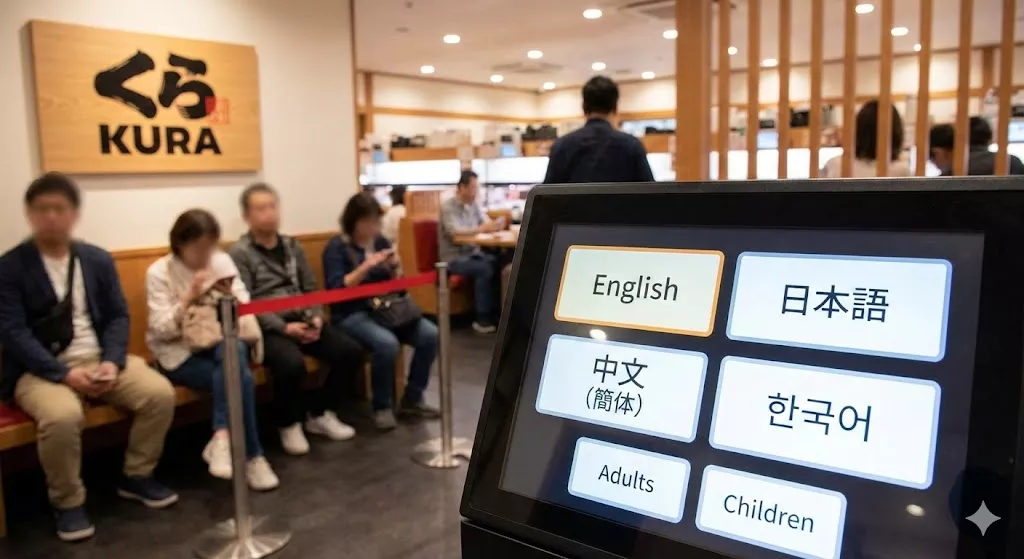
Note: Keep an eye on the monitor in the waiting area. Even if the announcement is in Japanese, your number will be displayed on the screen!
Step 2: The Table Setup (Tea & Ginger)
Once you find your table number, sit down. Before you grab sushi, you need to set up your station. This part often confuses visitors the most!
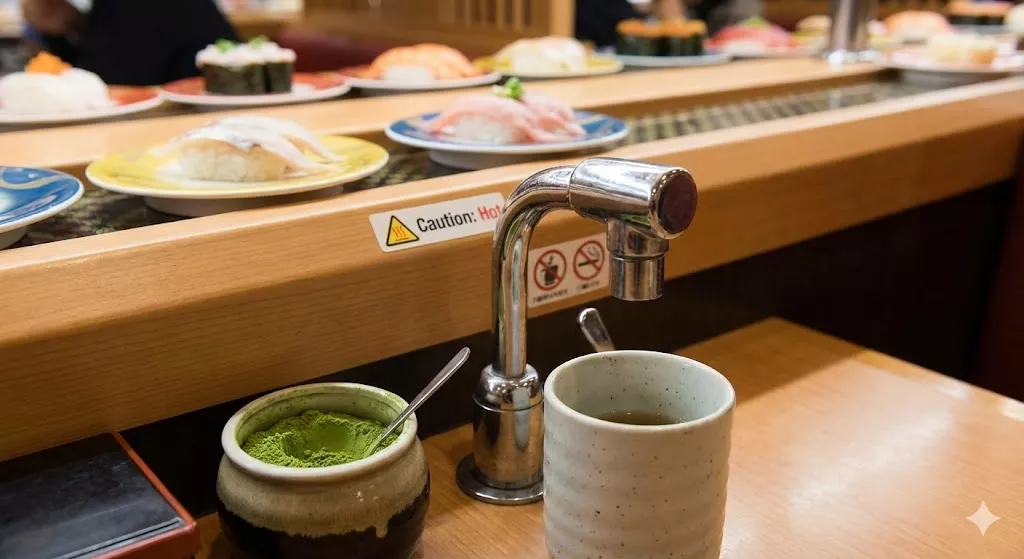
1. The Hot Water Tap
There is a black tap or faucet right at your table.
2. Make Your Green Tea (Agari)
You won’t find tea bags here. Instead, look for a small container filled with green powder (Matcha).
- Put 1 or 2 small scoops of powder into your cup.
- Add the hot water from the tap.
- Stir and enjoy!
3. Pickled Ginger (Gari)
There is usually a box of pickled ginger on the table. It is free and meant to cleanse your palate between eating different types of fish.
Step 3: Two Ways to Order
Now for the fun part! There are two ways to get your food.
Option A: Grab from the Belt
If you see a plate you like on the rotating belt, you can simply take it.
- The Golden Rule: Once you touch a plate, you must take it. Never put a plate back on the belt after touching it.
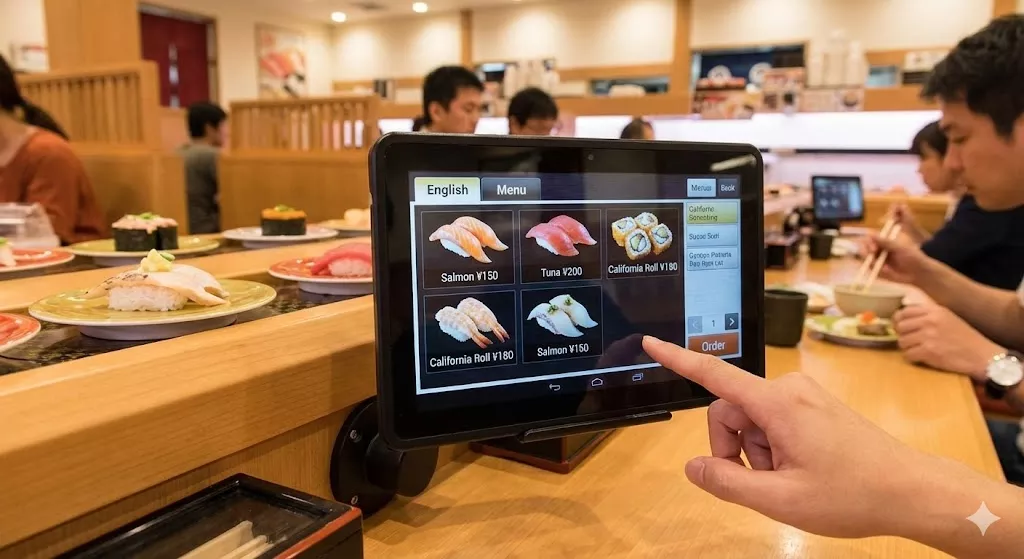
Option B: Order via Tablet (Recommended)
Most shops have a tablet above the table. This is often the best way to get fresh sushi or specific items like tempura, ramen, or drinks.
- Switch the tablet language to English.
- Browse the menu categories and tap “Order.”
- Your sushi will arrive on a separate “Express Lane” (upper belt) or stop directly in front of you.
Step 4: Essential Dining Etiquette
To enjoy your sushi like a pro, keep these simple manners in mind:
- Soy Sauce: Pour a small amount of soy sauce into the small dish provided. Do not pour it directly over the sushi.
- Wasabi: In many budget Kaiten-Sushi places, the sushi comes without wasabi (Sabi-nuki). You will find packets of wasabi or a container of it on the rotating belt. Add it to your taste!
- Chopsticks: Do not rub your disposable chopsticks together; it is considered rude in Japan.
Step 5: How to Pay (The Bill)
You’ve eaten your fill! Now, how do you leave?
Case 1: The “Plate Count” System (Traditional)
- Stack your finished plates neatly at the end of the table.
- Tap the “Call Staff / Check Out” button on the tablet.
- A staff member will come and count your plates (sometimes using a handheld scanner).
- They will hand you a plate card/receipt. Take this to the register near the exit to pay.
Case 2: The “Plate Slot” System (e.g., Kura Sushi)
- At chains like Kura Sushi, you slide your finished plates into a slot at the table.
- The machine counts them automatically (and you might even win a small toy game called Bikkura Pon!).
- Press the “Check Out” button on the tablet, then go directly to the Self-Checkout Kiosk at the front.
Conclusion
Kaiten-Sushi is a highlight of any trip to Japan. It is fast, delicious, and a great way to try different types of fish without spending a fortune.
Now that you know how to use the hot water tap and order with confidence, go enjoy your sushi feast!
Read Next:


Comments