
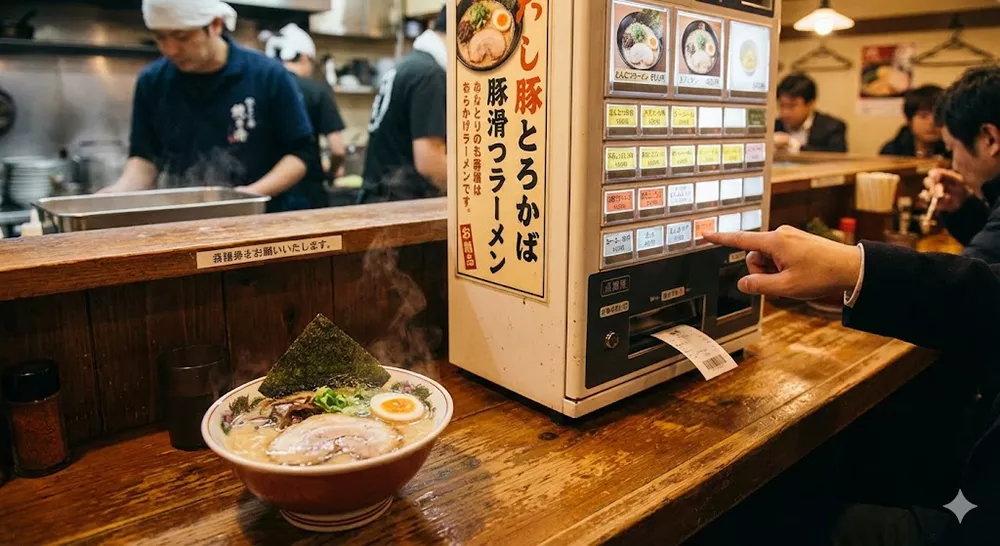
Forget the instant noodles you eat at home. Authentic Japanese Ramen is a culinary masterpiece. However, walking into a small Ramen shop can be confusing because of one thing: The Vending Machine. Here is how to order your bowl like a pro.
How to Use the Ticket Machine
Most Ramen shops do not have waiters who take your order at the table. You must buy a ticket at the entrance first.
Step-by-Step Guide:
- Insert Cash First: Put your Yen bills or coins into the machine before pressing any buttons. (Note: Many machines do not accept ¥5,000 or ¥10,000 bills, so keep ¥1,000 bills ready).
- Press the Button: Look for the biggest button with a photo—that is usually their signature dish.
- Get the Ticket: Take the small paper ticket and your change.
- Hand it to the Chef: Sit at the counter and place the ticket on the high ledge in front of you.
Know Your Broth: The Big 4
Ramen is defined by its soup. Knowing these four types will help you choose:
- Tonkotsu (Pork Bone): Creamy, white, and rich. Made by boiling pork bones for hours. Famous in Hakata/Fukuoka (e.g., Ichiran, Ippudo).
- Shoyu (Soy Sauce): Clear, brown broth. The classic Tokyo style. Tangy and savory.
- Miso: Rich and nutty. Originating from Hokkaido, this is perfect for cold days.
- Shio (Salt): Light, clear, and yellowish. You can taste the ingredients clearly.
Essential Toppings: What’s in Your Bowl?
Don’t be intimidated by the toppings! Here are the standard ingredients you will find in most bowls.
- Chashu (Braised Pork Belly): This is the star of the show. Slices of fatty pork belly that have been simmered in soy sauce and mirin until they melt in your mouth.
- Ajitama (Seasoned Egg): A soft-boiled egg marinated in a soy-based sauce. The yolk is usually gooey and rich—a “must-add” topping if it’s not included!
- Menma (Bamboo Shoots): Fermented bamboo shoots. They have a distinct, slightly crunchy texture that balances the softness of the noodles.
- Nori (Seaweed): A sheet of dried seaweed. Pro tip: Wait until it soaks up a little broth, then wrap it around your noodles to eat it.
The Art of “Slurping”
In Western culture, making noise while eating is rude. In Japan, slurping your noodles is encouraged! Why?
- It cools down the hot noodles.
- It enhances the aroma of the soup. Don’t be shy—make a “Zuru Zuru” sound!
🍜 Pro Tip: How to Order “Kaedama”
Still hungry? Don’t drink all your soup yet! At Tonkotsu ramen shops (like Ichiran or Ippudo), you can order a “Kaedama” (noodle refill) for about ¥100–¥150.
- Make sure you have soup left in your bowl.
- Raise your hand and say, “Kaedama, please!”
- Add the fresh noodles to your soup and enjoy round two!
Frequently Asked Questions (FAQ)
Q: Is Ramen vegetarian/vegan friendly? A: generally, no. Even if you order vegetable ramen, the soup stock (dashi) often contains pork bones, chicken, or fish (bonito flakes). If you are strictly vegetarian, look for shops explicitly marked “Vegan Ramen.”
Q: How much does a bowl of Ramen cost? A: On average, a standard bowl costs between ¥800 and ¥1,200 ($5–$8 USD). Adding extra toppings like Chashu or eggs will add another ¥200–¥400. Note: Most ticket machines only accept cash!
Q: Can I take leftovers home (Doggy bag)? A: No. Taking leftovers home is generally not done in Japan due to strict food hygiene laws and the fact that noodles get soggy quickly. Please try to finish your bowl at the shop!
Read Next:


Comments