
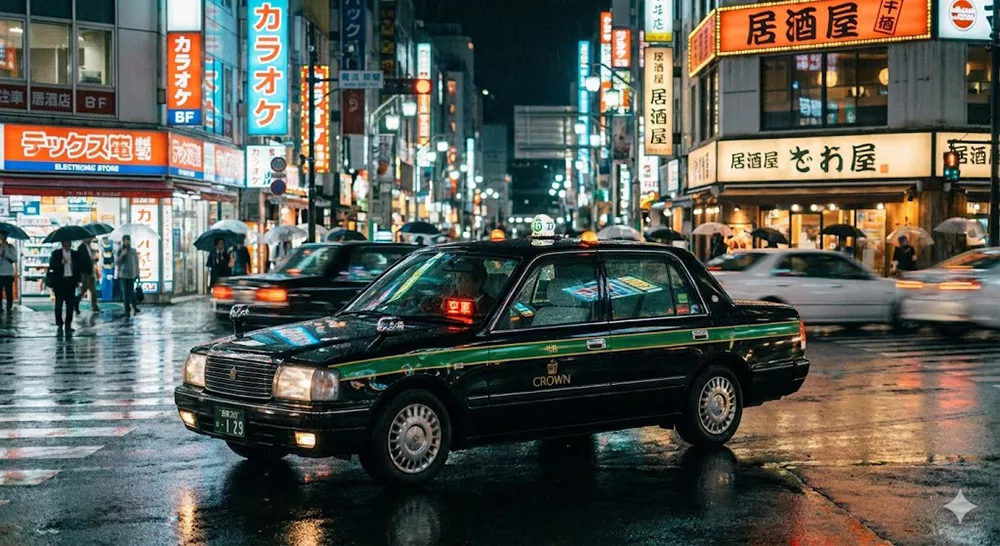
While trains are convenient, sometimes you need a taxi, especially with heavy luggage. Here is how to use taxis in Japan without stress.
1. The “Automatic Door” Rule
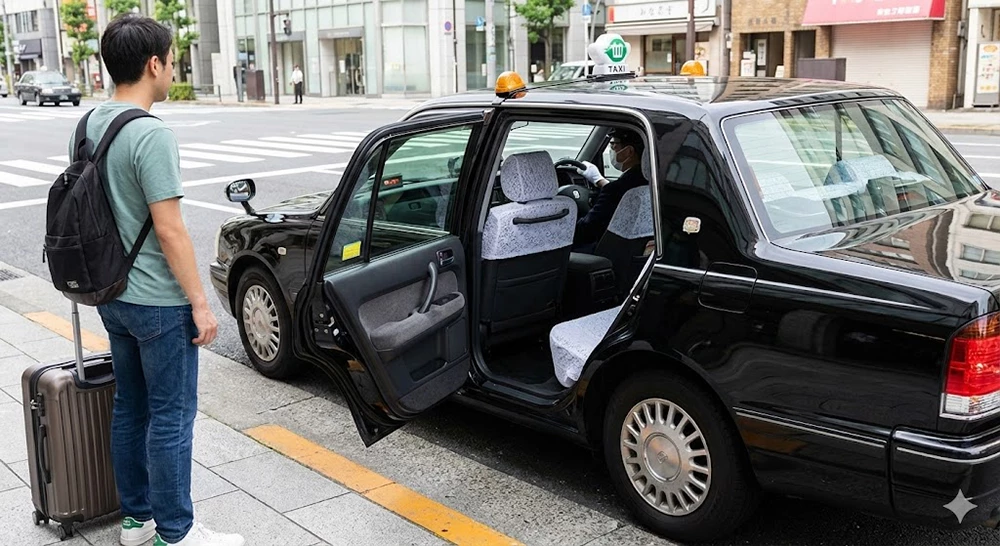
This is the most common mistake tourists make. Do not open or close the taxi door yourself. In Japan, the rear left door opens and closes automatically by the driver. If you try to open it manually, you might break the mechanism or upset the driver. Just stand back and wait for it to open.
How to Tell the Driver Your Destination
Here is the hard truth: Most taxi drivers in Japan do not speak English. Pronouncing a Japanese address is difficult, and misunderstandings are common.
- The Best Strategy: Do not try to say the address. Instead, show the written address in Japanese on your phone (Google Maps) or a hotel business card.
- Large Print: Drivers are often older, so zoom in on the map or text so they can read it easily.
- “Near” is key: If you are going to a small Airbnb, tell them a nearby landmark (like a famous hotel or station) and guide them from there.
2. Is there Uber in Japan?
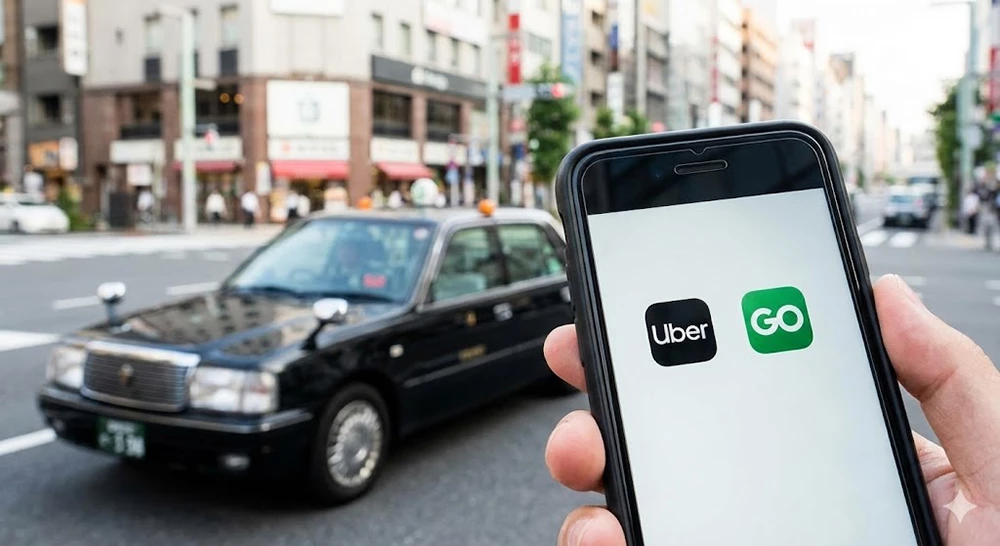
Yes, but it is different from other countries. In Japan, “Uber” usually calls a regular taxi, not a private car. The price is the same as a standard taxi meter. We also recommend downloading the “GO” app. It is the most popular taxi app in Japan and works in many cities where Uber is not available.
Crucial Tip: Download Apps BEFORE You Arrive
This is a lifesaver tip. To set up taxi apps like GO or Uber, you usually need to verify your phone number via SMS text message. If you wait until you arrive in Japan, you might not receive the SMS if you are using a Data-only SIM card or Pocket WiFi. Action Item: Download and register your account while you are still in your home country.
3. Payment Methods
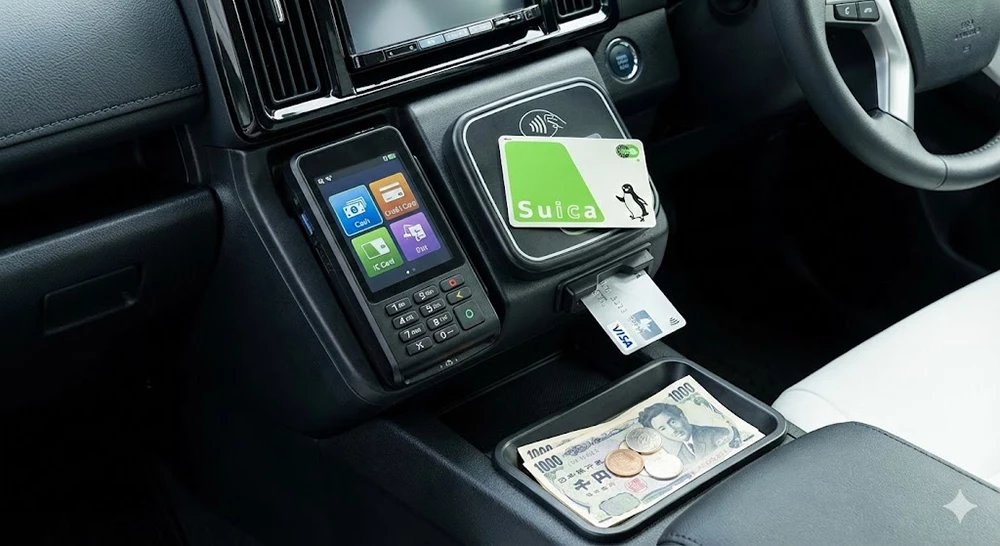
Most taxis in major cities (Tokyo, Osaka, Kyoto, Hiroshima) accept:
- Cash (Yen)
- Credit Cards (Visa, Mastercard, Amex)
- IC Cards (Suica, Pasmo)
However, in rural areas, some older taxis may only accept cash. Always carry some yen bills just in case.
Understanding the Cost: The “Late Night” Trap
Japanese taxis are generally clean and safe, but they are not cheap.
- The Base Fare: Usually starts around 500–600 yen for the first kilometer.
- Late Night Surcharge (Warimashi): Be careful! Between 10:00 PM and 5:00 AM, the fare increases by 20% to 30%. If you miss your last train, the taxi ride home will be significantly more expensive.
- Highway Tolls: If you take an expressway (highway), the passenger pays the toll fee.
4. Tips on Catching a Taxi
Red light on the dashboard: Means “Vacant” (Available). Wait, Red means Go? Yes! In Japan, a red light means the taxi is empty and looking for a customer. Raise your hand to hail it. Green light: Means “Occupied”. Do not try to stop these taxis.
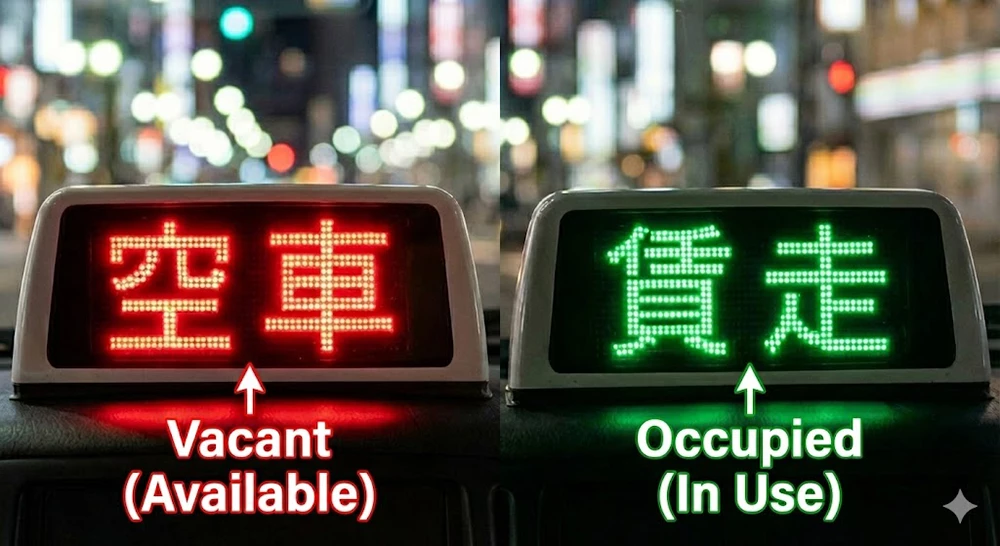
- Red light on the dashboard: Means “Vacant” (Available). Raise your hand to hail it.
- Green light: Means “Occupied” (Someone is inside).
- No Tipping: You do not need to tip taxi drivers in Japan. The service fee is included in the meter price.
Airport Transfers: Use the “Flat Rate”
Taking a taxi from Narita or Haneda Airport to Tokyo? Ask for the “Flat Rate Fare” (Teigaku Unchin). Most taxi companies offer a fixed price to specific zones in Tokyo. This is often cheaper than the meter price and protects you from getting stuck in traffic with the meter running. You usually need to book this in advance or ask at the official taxi stand at the airport.


Comments