

Imagine landing at Haneda Airport. You are excited, but also exhausted. You try to open Google Maps to find your hotel, but… “No Connection.”
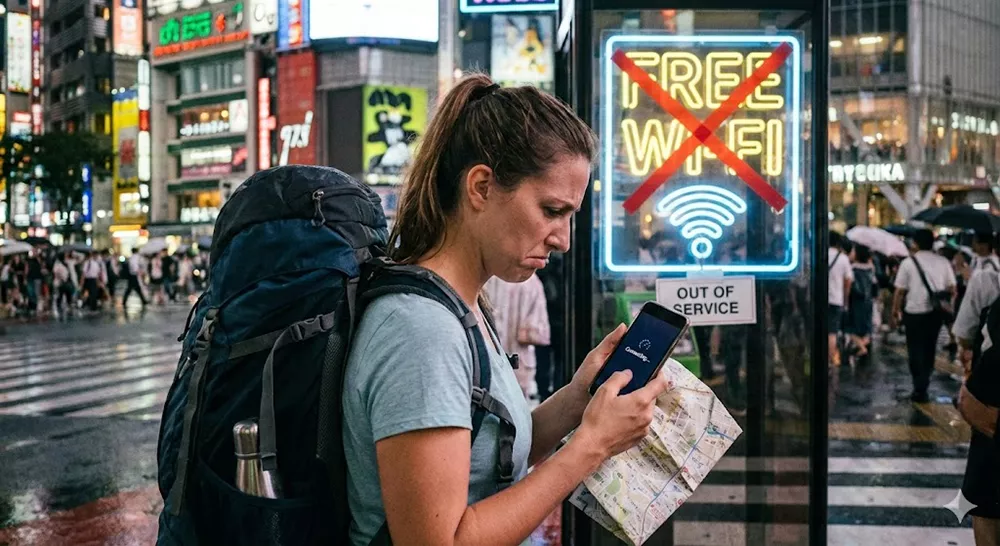
Japan is a high-tech country, but surprisingly, finding reliable Free WiFi on the street is difficult. To survive in Japan—for train schedules, translation apps, and maps—you need your own internet connection.
In 2026, there are two main contenders: the modern eSIM and the traditional Pocket WiFi. Which one should you choose? Here is the ultimate comparison.
Contents
- The Truth About “Free WiFi” in Japan
- Option A: eSIM (Best for Solo & Couples)
- Option B: Pocket WiFi (Best for Families & Groups)
- Option C: Physical SIM Card (For Older Phones)
- Verdict: Which One Should I Buy?
1. The Truth About “Free WiFi” in Japan
Many tourists assume, “Japan is futuristic, so there must be free WiFi everywhere, right?”
Wrong.
While convenience stores and major stations have WiFi, it is often:
- Slow and unstable.
- Requires complex registration (in Japanese).
- Disconnects every 30-60 minutes.Do not rely on Free WiFi. You will regret it when you are lost in a maze-like station. You need a paid option.
2. Option A: eSIM (Best for Solo & Couples)
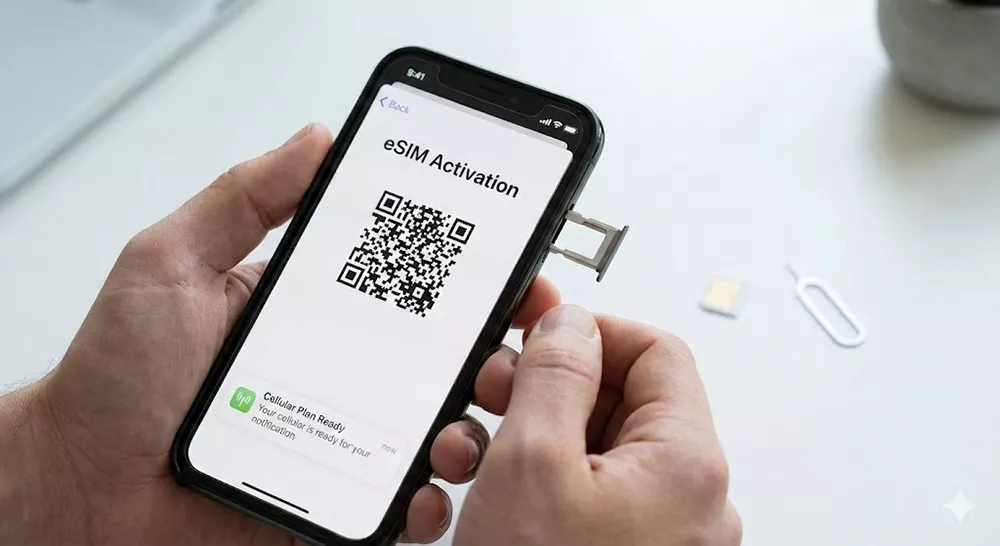
In the last few years, eSIM has become the gold standard for travel. It is a digital SIM card that you download to your phone.
- Pros:
- Instant: You can buy and install it while you are still in your home country. Internet works the moment you land.
- No Hardware: Nothing to carry, nothing to charge, nothing to return at the airport.
- Keep Your Number: You can keep your home SIM active for calls/texts while using the eSIM for data.
- Cons:
- Your phone must be “Unlocked” and eSIM compatible (iPhone XR or newer).
- Data is usually limited (e.g., 1GB/day or 10GB total).
- Popular Brands: Ubigi, Airalo, Holafly.
3. Option B: Pocket WiFi (Best for Families & Groups)
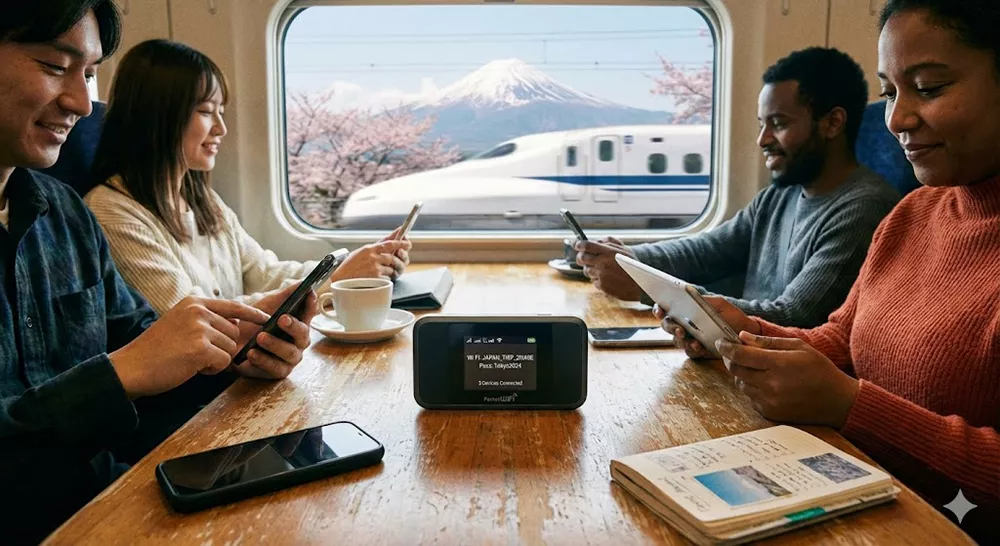
This is a small router that you rent at the airport. It broadcasts a WiFi signal that multiple devices can connect to.
- Pros:
- Shareable: Connect up to 5-10 devices. Great if you are traveling with family or friends.
- Unlimited Data: Many rental plans offer truly unlimited data (great for Instagram/TikTok).
- Easy: Just turn it on and enter the password. No technical setup required.
- Cons:
- Battery Anxiety: You have to charge it every night. If the battery dies, everyone loses internet.
- Pickup/Return: You must pick it up at the airport counter and return it before you leave.
- Popular Brands: Ninja WiFi, Sakura Mobile.
4. Option C: Physical SIM Card (For Older Phones)
If your phone is old and does not support eSIM, you can buy a physical prepaid SIM card.
- Where to buy: Vending machines at the airport or electronics stores like Bic Camera.
- Warning: The setup (APN settings) can be tricky, and the plastic cards are tiny and easy to lose. Unless your phone is old, eSIM is usually better.
5. Verdict: Which One Should I Buy?
Here is my legendary advice based on your travel style:
| If you are… | The Winner is… | Why? |
| Solo Traveler | eSIM | Cheapest and easiest. No extra baggage. |
| Couple (2 people) | eSIM (x2) | Getting two eSIMs is often cheaper than renting one router. Plus, you can split up and still have internet. |
| Family / Group | Pocket WiFi | One device covers everyone. Cheaper per person. |
| Heavy User | Pocket WiFi | If you watch Netflix or upload 4K videos, get the unlimited data plan of a router. |
Final Tip: Whichever you choose, book it BEFORE you fly. Airport counters are often sold out, and prices are higher if you buy on the day of arrival.


Comments