
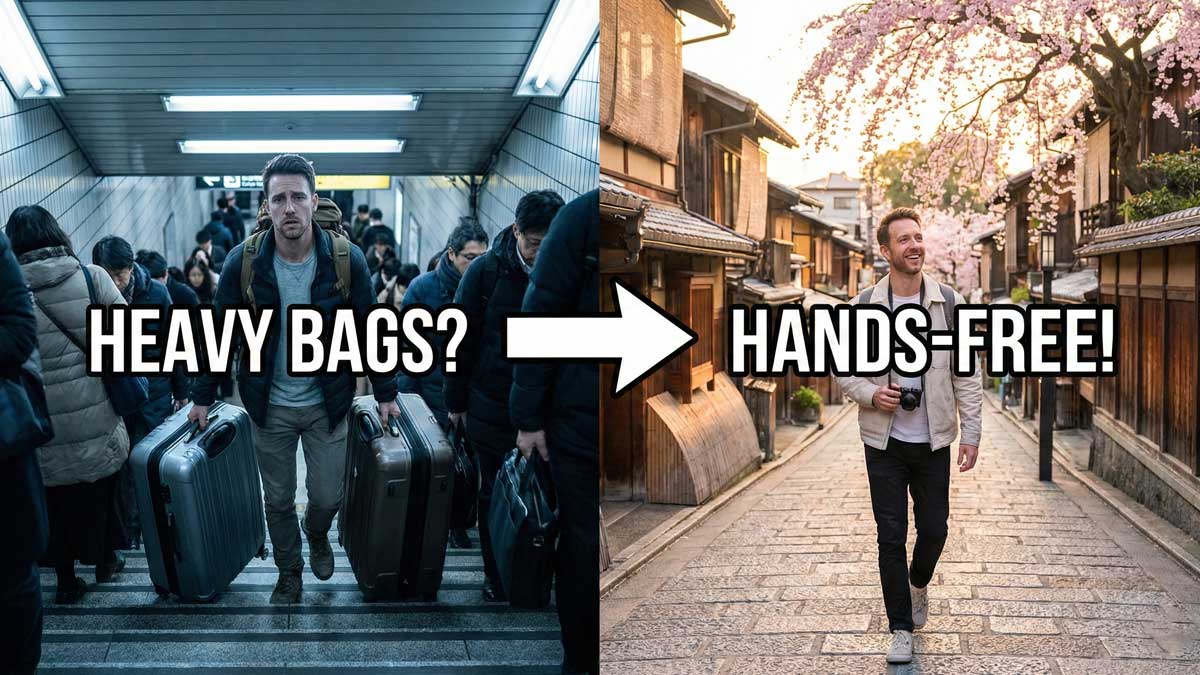
Dragging a heavy suitcase through Shinjuku Station during rush hour is a nightmare. Navigating endless stairs in rural stations is a workout you didn’t ask for.
If you are planning a trip to Japan, there is one magic word you need to memorize: Takkyubin (宅急便).
Japan’s luggage forwarding system is fast, reliable, and surprisingly affordable. It allows you to send your bags from the airport to your hotel, or from hotel to hotel, so you can explore the country hands-free.
Here is your ultimate guide to using luggage forwarding services in Japan.
What is “Takkyubin”?
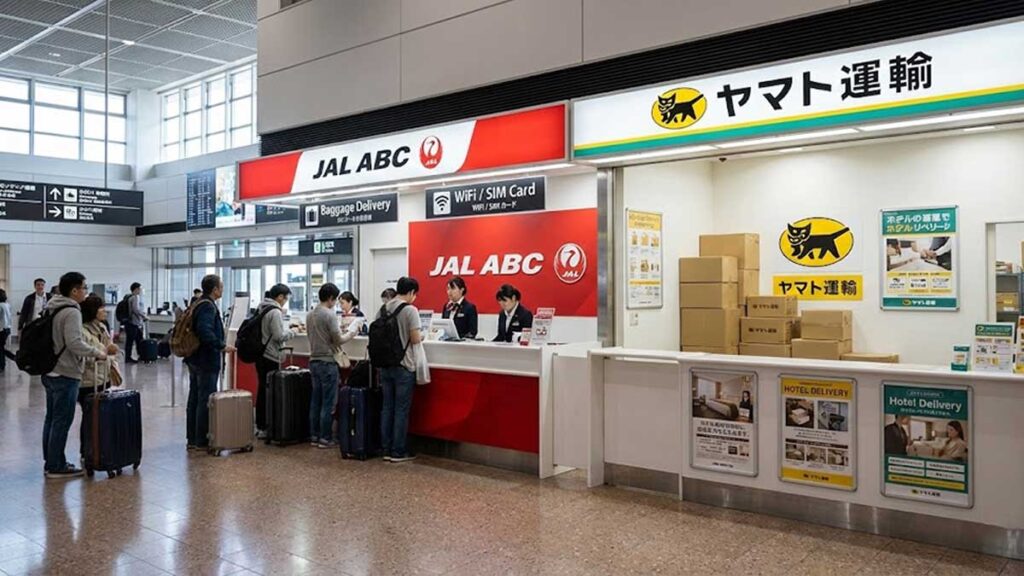
Takkyubin (often synonymous with Takuhaibin) is a door-to-door delivery service. While “Takkyubin” is technically the trademark of Yamato Transport (the logo with the black cat carrying a kitten), the term is used generally for all delivery services, including Sagawa Express.
Why you should use it:
- No Heavy Lifting: Avoid carrying bags up and down station stairs (elevators are often hard to find).
- Crowd Control: Japanese trains are incredibly crowded. Large suitcases are a hassle for you and locals.
- Freedom: You can stop at a sightseeing spot on your way to your next destination without finding a coin locker.
How Much Does it Cost? And How Long Does it Take?
The cost depends on the size of your suitcase and the distance.
- Average Cost: 2,000 JPY to 3,000 JPY ($13 – $20 USD) per large suitcase.
- Delivery Time: Usually next-day delivery.
- Note: If you are sending luggage to a nearby prefecture (e.g., Osaka to Kyoto) in the morning, same-day delivery might be possible, but next-day is the standard rule.
- Note: Sending luggage to/from Hokkaido or Okinawa can take 2 days.
Always keep a “survival kit” (pajamas, toiletries, medication, one change of clothes) in a small backpack with you, just in case delivery takes an extra day.
Scenario 1: Airport to Hotel
You just landed at Narita, Haneda, or Kansai Airport (KIX). You want to start sightseeing immediately, but you have huge bags.
- Look for the “Luggage Delivery” or “JAL ABC” / “Yamato” counters in the arrival hall.
- Show them your hotel booking confirmation (make sure the address is in English or Japanese).
- Pay the fee (Credit cards are usually accepted).
- Your bag will arrive at your hotel the next day (sometimes same-day if dropped off very early).
Want to book in advance? You can book luggage delivery services online before you arrive. This is often easier than filling out forms at the counter after a long flight.
(Safe, Reliable & English Support available)
(Klook offers services like LuggAgent which can be very convenient for first-timers!)
Scenario 2: Hotel to Hotel
This is the most common way to use the service.
- Ask the Front Desk: Go to your hotel reception and say, “I want to send my luggage to my next hotel.”
- Fill out the Waybill: The staff will give you a form. They often help you fill it out.
- Payment: You usually pay the shipping fee to the hotel front desk upon checkout.
- Receive: When you arrive at your next hotel, your bags will be waiting in the lobby or already in your room!
Important: Always check with your destination hotel in advance to ensure they can accept luggage deliveries. (Most hotels do, but some tiny Airbnbs or hostels may not).
Scenario 3: Using Convenience Stores (Konbini)
If you are staying at an Airbnb without a front desk, you can send luggage from a convenience store like 7-Eleven or FamilyMart.
- Look for the Yamato (Black Cat) logo or Sagawa logo at the store entrance.
- Ask the clerk for a waybill.
- You will need to fill out the address in Japanese (usually). This can be tricky.
- Tip: Show the clerk the address on your phone.
- Pay the fee in cash (usually cash only for services at Konbini).
How to Read the Waybill (Label)
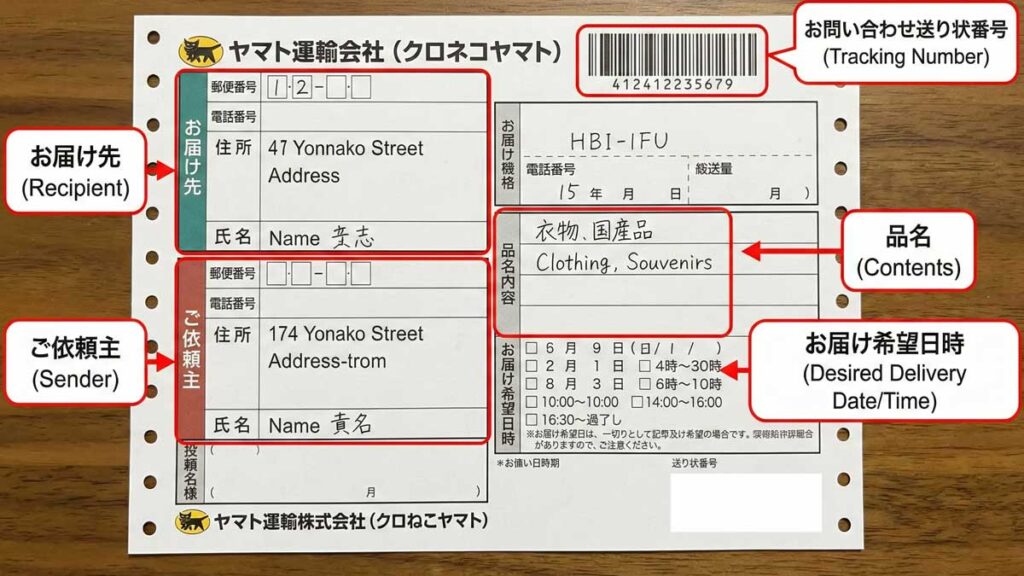
Don’t panic when you see the form! Here is what you need to know.
- Green Label: Prepaid (Motobarai). You pay when you send the bag. (Use this one!)
- Orange/Pink Label: Cash on Delivery (Chakubarai). The receiver pays. (Do not use this for hotels!)
Key Fields to Fill:
- To (お届け先): Zip code, Address, Hotel Name, and Check-in Date.
- From (ご依頼主): Your name and mobile number.
- Contents (品名): Write “Suitcase” or “Clothes”.
3 Things to Remember
- Delay Risk: Weather (typhoons/snow) can delay shipments. Always check the forecast.
- Valuables: Do not put cash, passports, expensive jewelry, or fragile electronics in the checked luggage. Keep them in your carry-on.
- Cut-off Times: Most hotels have a cut-off time (usually around 3:00 PM or 4:00 PM) for shipping out that day. Ask the reception the night before!
Conclusion
Using Takkyubin is a game-changer for traveling in Japan. It transforms a stressful transit day into an enjoyable sightseeing day. Spending $20 to send your bag is worth every penny for the freedom it buys you.
Have you used luggage forwarding in Japan? Let us know your experience in the comments!
Read Next:


Comments