Planning a trip to Japan involves more than just booking a flight. One of the most exciting parts of visiting Japan is choosing where to sleep.
Japan offers a wide range of accommodation options, from centuries-old traditional inns to futuristic sleeping pods. Choosing the right place can turn a simple overnight stay into an unforgettable cultural experience.
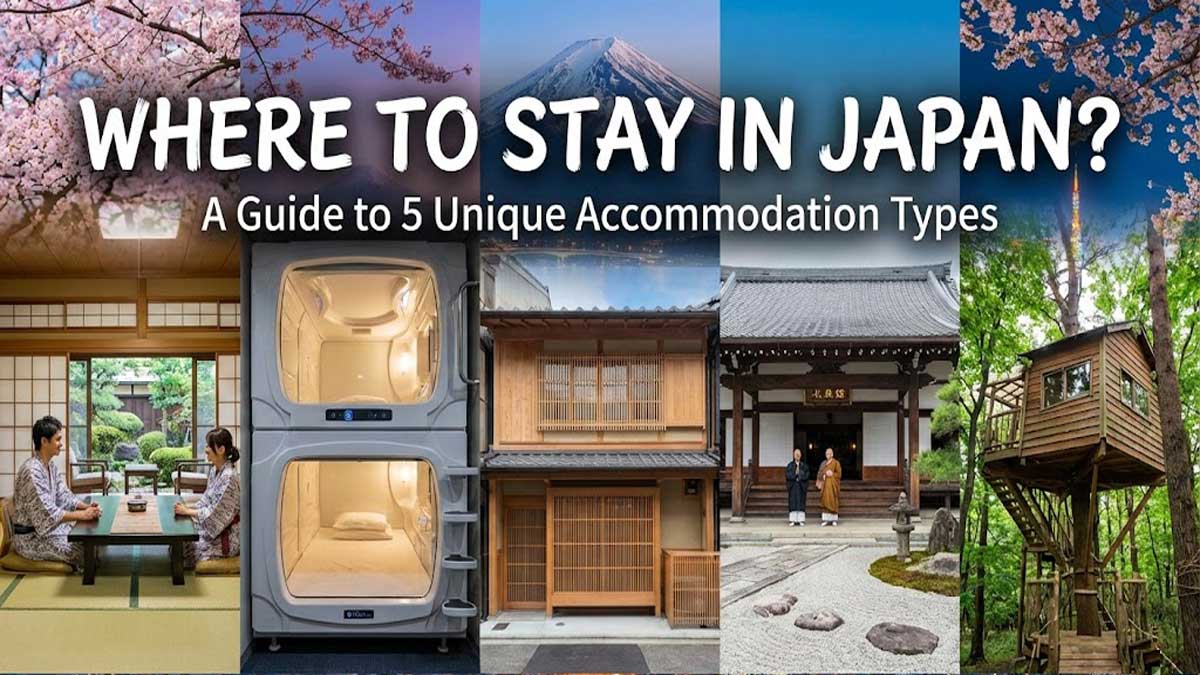
Here is a guide to the 5 unique accommodation types you will find in Japan, along with tips on how to choose the best one for you.
1. Ryokan (Traditional Japanese Inn)
If you want the ultimate Japanese cultural experience, you must stay at a Ryokan for at least one night. This is not just a hotel; it is a destination in itself.
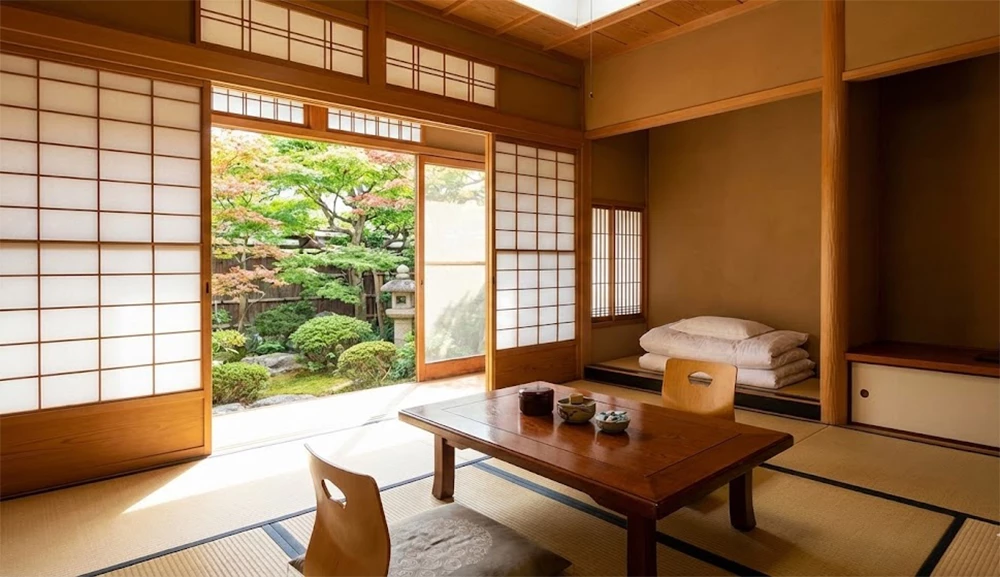
- The Experience: You will sleep on futons (bedding) laid out on a tatami (straw mat) floor. Guests are provided with Yukata robes to wear during their stay.
- The Food: Most ryokans include a luxurious multi-course dinner called Kaiseki and a traditional Japanese breakfast.
- The Bath: Many ryokans feature communal hot spring baths (Onsen), which are perfect for relaxing after a day of travel.
- Best for: Culture lovers, couples, families wanting a special experience.
- Budget: High ($$$)
2. Business Hotels
Business Hotels are the most common choice for travelers who prioritize convenience and budget. As the name suggests, they were originally designed for Japanese salarymen on business trips, but they are excellent for tourists too.
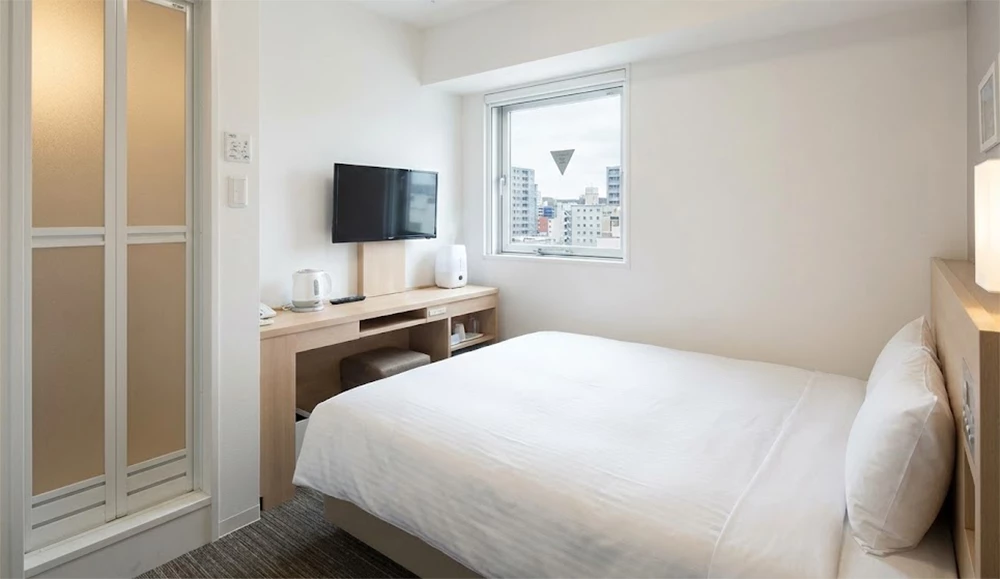
- The Experience: Rooms are known for being very compact (sometimes surprisingly small!), but they are clean, high-tech, and usually located right next to train stations.
- Amenities: They provide everything you need: pajamas, toothbrushes, razors, and fast Wi-Fi. You can travel light!
- Efficiency: Check-in is fast, and convenience stores are usually nearby.
- Best for: Solo travelers, sightseeing-focused tourists who only need a place to sleep.
- Budget: Low to Medium ($ – $$)
3. Capsule Hotels
Originating in Japan, Capsule Hotels offer a futuristic sleeping experience. If you are looking for a story to tell your friends back home, this is it.
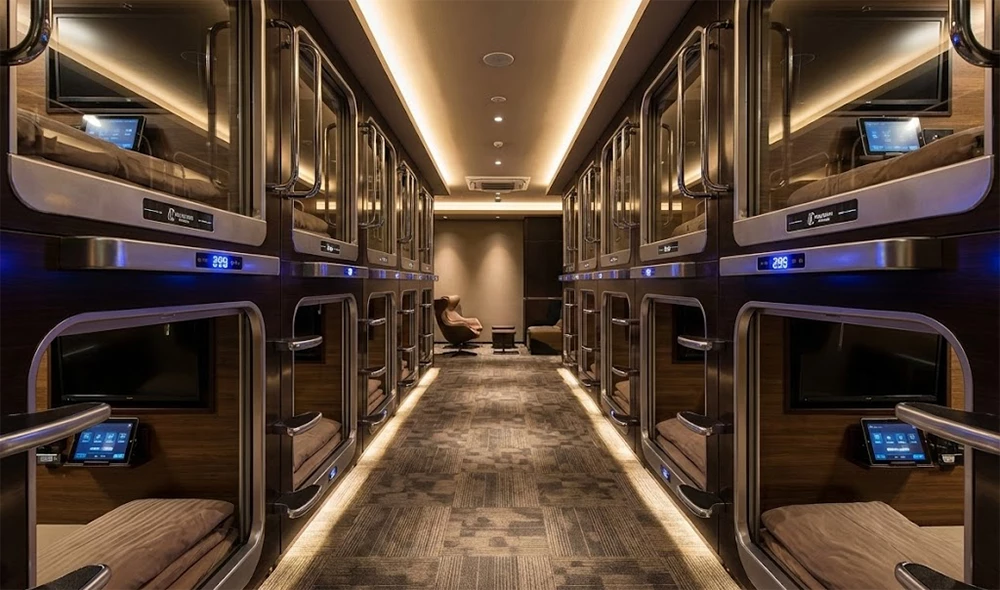
- The Experience: You sleep in a small pod roughly the size of a single bed. It contains a light, an alarm clock, and sometimes a TV.
- Facilities: Bathrooms and lounge areas are shared. Large luggage is kept in a locker room.
- Note: Many capsule hotels have separate floors for men and women.
- Best for: Backpackers, solo adventurers, budget travelers.
- Budget: Very Low ($)
4. Minshuku (Family Guesthouses)
A Minshuku is a family-operated Japanese-style bed and breakfast. Think of it as a simpler, more rustic version of a Ryokan.
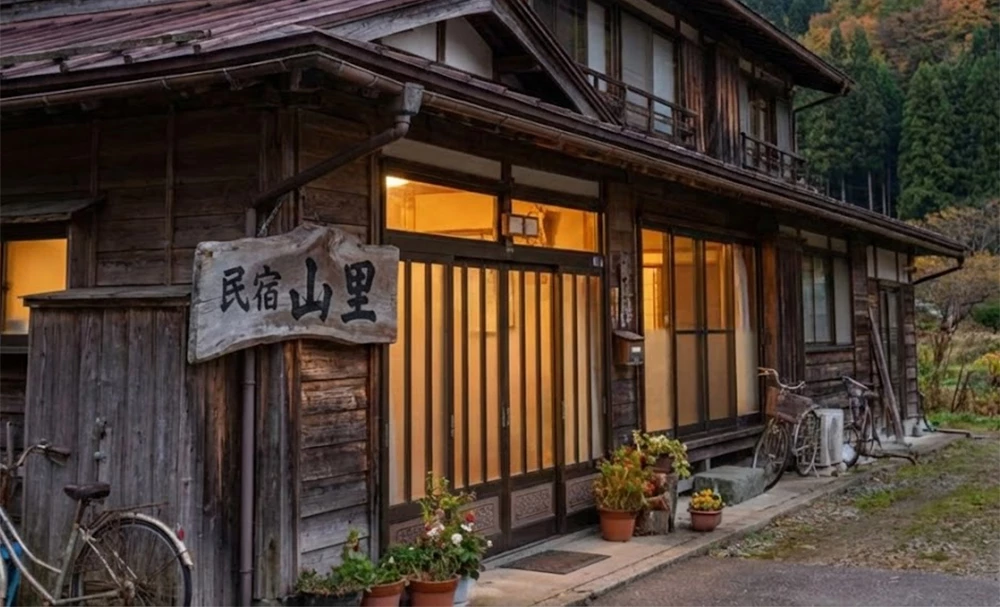
- The Experience: You get to meet local hosts and experience a more “at-home” atmosphere. It feels like staying at a relative’s house in the countryside.
- Facilities: Bathrooms and toilets are usually shared with other guests or the host family. Bedding is typically futons on tatami mats.
- Food: Home-cooked local meals are often the highlight.
- Best for: Meeting locals, authentic rural experiences.
- Budget: Medium ($$)
5. Shukubo (Temple Lodging)
Did you know you can stay overnight at a Buddhist temple? This is known as Shukubo. Originally for pilgrims, many temples now welcome tourists.
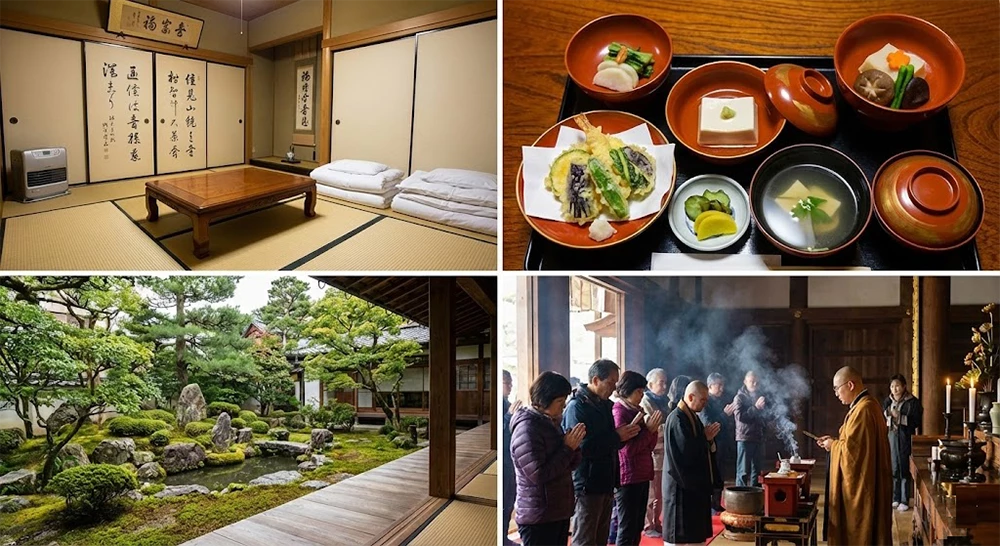
- The Experience: It offers a simple, spiritual atmosphere. You may be invited to join the monks for morning prayers/meditation.
- The Food: You will be served Shojin Ryori, traditional Buddhist vegetarian cuisine.
- Location: Mt. Koya (Koyasan) is the most famous place for this experience.
- Best for: Spiritual seekers, vegetarians, history buffs.
- Budget: Medium to High ($$-$$$)
Important Tips for Booking
Before you book, keep these specific Japanese rules in mind:
- Book Early: For Cherry Blossom season (Spring) and Autumn foliage season, hotels can sell out 3–6 months in advance.
- Smoking vs. Non-Smoking: Japan still has smoking rooms. If you are sensitive to smoke, make sure to explicitly choose a “Non-Smoking Room.”
- Check-in Times: Especially for Ryokans and Minshukus with dinner service, check-in deadlines (usually around 17:00 or 18:00) are strict. Do not be late!
- Accommodation Tax: In cities like Tokyo, Osaka, and Kyoto, you may need to pay a small accommodation tax (usually 100–200 yen per night) at the front desk.
Comments